
Travel planner · Anyone booking a first Hamburg hotel
Where to Stay in Hamburg
A decision guide, not a hotel list: six Hamburg neighborhoods compared on price, noise, transit and what you actually walk to when you step outside.
Hamburg is not a one-center city. Where you book changes your trip more here than in most European capitals, because the port, the downtown lakes and the nightlife district are three separate places with three different characters. This guide compares six neighborhoods on the things that decide a booking: what you walk to, how loud it gets at night, how far the airport and the main station are, and roughly what a night costs.
The short answer: first-time visitors should book the Neustadt or Altstadt, because everything else is a short walk or one train stop away. HafenCity is for the view, St. Pauli for the nightlife, St. Georg for the budget and the train station, Altona and Ottensen for a neighborhood that is not about tourists, and the Sternschanze if you are under thirty.
Two things about Hamburg geography that are easy to get wrong from a map. First, the port is on the south side and the lakes are on the north side, and they are only about a mile apart, so a central hotel really does reach both. Second, the Reeperbahn is loud in a way that carries: rooms facing it are noisy Thursday through Sunday in a way no other Hamburg neighborhood is.
Prices below are the lowest nightly rate we list for a hotel in that neighborhood, pulled straight from our hotel pages. They are a floor for orientation, not a quote. Actual rates move hard around the harbor birthday in May, the Reeperbahn Festival in September and the Christmas markets in December.
The short version
Lowest nightly rate we list in each neighborhood, taken from our own hotel pages. A floor for orientation, not a quote.
| Neighborhood | Best for | Skip it if | From |
|---|---|---|---|
| HafenCity | First-timers who want the Elbphilharmonie and the warehouses on their doorstep | Anyone looking for old streets, corner bars or a neighborhood that existed before 2008 | € 165 |
| Neustadt and Altstadt | First visits, walkers, and anyone who wants to decide each morning where to go | Travelers who want a neighborhood feel rather than a city center | € 85 |
| St. Pauli | Nightlife, music, football, and anyone who wants to walk home from the Kiez | Light sleepers, and families with small children | € 140 |
| St. Georg | Rail arrivals, tight budgets, and travelers who want the museums close | Anyone who wants a quiet, polished street outside the door | € 55 |
| Altona and Ottensen | Repeat visitors, longer stays, families, and anyone who wants to eat where locals eat | Two-night trips built around the main sights | not listed |
| Sternschanze | Younger travelers, solo trips, bar hopping without the Reeperbahn | Anyone who wants calm, or a wide hotel selection | € 95 |
From € 165 a night
HafenCity: the view, and the newest part of the city
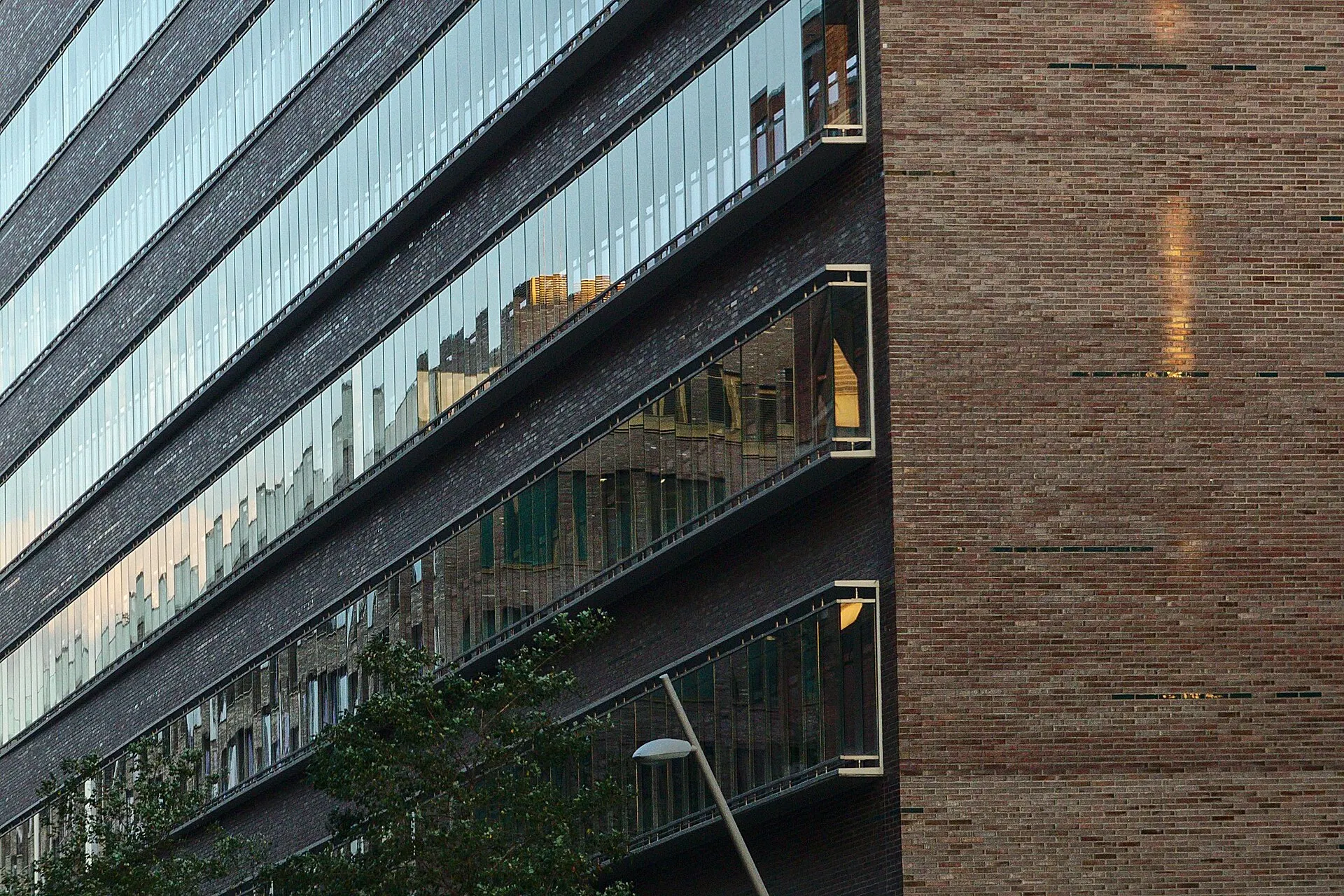
Since 2008, Europe's largest inner-city development project has been rising on 388 acres of former dockland, and it is where the Elbphilharmonie, the maritime museum and the promenades along the water all are. The UNESCO warehouse district sits directly to the north, so you can walk out of your hotel and into the best-known views in Hamburg within five minutes. The trade-off is honest: this is new-build glass and brick, it is quiet after dark in a way that some people find restful and others find sterile, and restaurant prices reflect the address. If your trip is about the port and the concert hall, nothing beats it.
- Warehouse district and Elbphilharmonie within a five-minute walk
- Waterfront promenades, and the U4 subway line straight into downtown
- Quiet at night, no nightlife noise at all
- Expensive, and thin on budget options
- Very little street life after dinner
- Almost everything is new construction
U4 subway from Ueberseequartier or Elbbruecken, and the public harbor ferry from the Elbphilharmonie stop, which runs on an ordinary 4.00 euro transit ticket.
From € 85 a night
Neustadt and Altstadt: the safe first-time choice
These two districts are Hamburg's center, split by the old city wall line that no longer exists. The Altstadt holds the city hall, the brick office quarter and the Chilehaus; the Neustadt holds the Jungfernstieg promenade, the arcades along the canal and the Michel church tower. Staying here means the inner lake is a five-minute walk in one direction and the harbor is fifteen minutes in the other. It is also the widest range of hotels in the city, from a grand hotel on the lake that has been open since 1897 down to British budget chains a few blocks inland. If you are coming to Hamburg once and want to see it, book here.
- Walk to the lakes, the city hall, the shopping streets and the warehouse district
- Every hotel category, from grand hotel to budget chain
- Central transit: the Jungfernstieg station connects most subway and commuter lines
- Business-district quiet on Sunday, when much of it closes
- Chain retail rather than independent shops
- The best rooms on the lake carry a real premium
Jungfernstieg station connects the U1, U2 and U4 subway lines with the S1, S2 and S3 commuter lines, which makes it the most useful base station in the city after the main terminal.
From € 140 a night
St. Pauli: the harbor and the Reeperbahn
St. Pauli went from dockworkers' quarter to the best-known nightlife district in Germany without ever fully leaving either identity behind. The Reeperbahn runs through the middle of it, the landing piers and the old Elbe tunnel are at the bottom of the hill, and the Millerntor stadium sits at the top. It is the most interesting neighborhood in Hamburg to stay in and the most compromised: Thursday through Sunday the noise is real, and it does not stop at midnight. Book a room facing a courtyard, not the street. In exchange you get harbor views from the hotels along the ridge and a fifteen-minute walk to the Sunday fish market.
- Walking distance to the Reeperbahn, the piers and the Sunday fish market
- Harbor views from the hotels along the ridge
- The best late-night food in the city
- Genuinely loud Thursday through Sunday
- Red-light business is right there, not tucked away
- Not a comfortable choice with young kids
S1 and S3 commuter trains at Reeperbahn, U3 subway at St. Pauli and Landungsbruecken. Every harbor ferry leaves from the piers here.
From € 55 a night
St. Georg: budget beds and the main station
St. Georg is Hamburg's oldest suburb, its long-standing queer neighborhood, and the district that wraps around the main train station. That combination gives it the widest budget range in the city: hostels and design-budget chains sit a few hundred yards from a five-star hotel on the outer lake where Udo Lindenberg has kept a room since the 1990s. The Lange Reihe is the spine, a genuinely good street of cafes and restaurants, and the art museum and the exhibition halls are both a short walk. The catch is the station itself, which like every big European rail hub has a rough edge at night on the sides facing the tracks.
- Cheapest beds in central Hamburg, plus a five-star option on the lake
- The main station on the doorstep, so every rail and transit line starts here
- Art museum, exhibition halls and the outer lake all on foot
- The blocks nearest the station are scruffy after dark
- Traffic noise on the main arteries
- It reads more as a transit hub than a destination
Hamburg Hauptbahnhof, the main railway station, sits at the edge of this district and is the hub for the subway, the commuter network and long-distance rail alike.
No listed hotels yet
Altona and Ottensen: the neighborhood that is not about you
Altona was an independent city until 1937, under Danish rule for much of its history, and it still has its own main railway station and its own center of gravity. Ottensen next door is the younger half: former factory blocks turned into independent cinemas, organic bakeries and small music venues. Together they give you the best everyday eating in Hamburg, the balcony viewpoint over the port, the fish auction hall, and a riverside walk west along the Elbe beach that is arguably the nicest hour in the city. The honest caveat: our hotel pages do not currently list a property in either district, so you will be booking through the live map below rather than from our own picks.
- Best independent restaurant density in Hamburg
- Altona has its own long-distance rail station
- The Elbe beach and the riverside walk start here
- We do not list hotels in these districts yet
- Twenty minutes from the city center rather than five
- Fewer big-name sights on the doorstep
Altona has its own railway station, which handles commuter and long-distance trains. The 62 harbor ferry from the landing piers stops at Neumuehlen and Oevelgoenne.
From € 95 a night
Sternschanze: young, loud and cheap
The Schanze is Hamburg's most political and most gentrified quarter at the same time: left-wing squats and street art on one block, natural wine bars and concept stores on the next. It is compact, it is genuinely fun in the evening, and it is the cheapest central neighborhood after St. Georg. The hotel supply is thin, which is the main reason not to plan around it, but if you find a room here you get a neighborhood where you will end up eating and drinking anyway, plus two train lines that reach the Reeperbahn, downtown and the airport without a change.
- Best casual bar and restaurant strip in the city
- Cheaper than downtown, and one stop from it
- Both the commuter trains and the U3 subway stop here
- Very few hotels to choose from
- Weekend street noise until late
- No major sights inside the district itself
Sternschanze station is served by both the commuter trains and the U3 subway, one stop from the Reeperbahn and two from downtown.
Live map
Live hotel map for Hamburg
Every neighborhood on this page at once, with current rates and availability. Useful for Altona and Ottensen, where we do not list a property of our own yet.
Map powered by Stay22 - live prices and current availability. We earn a small commission when you book; your price stays the same.
Tours & tickets
Tickets, tours and experiences
Curated activities from GetYourGuide - book directly, with free cancellation on most options.
Offers from GetYourGuide. If you book through these widgets, we earn a small commission - the price stays the same for you.
Common questions
What is the best area to stay in Hamburg for first-time visitors?
The Neustadt and Altstadt, Hamburg's twin downtown districts. From there the inner lake is about five minutes on foot, the harbor about fifteen, and the Jungfernstieg station connects almost every line in the transit network.
Is it safe to stay on the Reeperbahn?
St. Pauli is a normal residential district with about 1,500 people living on the Reeperbahn itself, and ordinary caution is enough. The real issue is noise, not safety: Thursday through Sunday it is loud until very late, so ask for a room facing a courtyard.
Where should I stay in Hamburg on a budget?
St. Georg, around the main train station, has the cheapest central beds in the city, including hostels and design-budget chains, plus a direct airport train. The Sternschanze is the alternative if you want more neighborhood and fewer rooms to choose from.
Where should I stay for the Christmas markets?
The Altstadt. The main Hamburg Christmas market sets up on the city hall square, and the Neustadt and Altstadt hotels put you inside walking distance of that and of the market strips along the shopping streets.
Which Hamburg neighborhood is best for the harbor and the Elbphilharmonie?
HafenCity. The concert hall, the UNESCO warehouse district and the maritime museum are all within a few minutes on foot, and the public harbor ferry stops at the Elbphilharmonie pier on an ordinary transit ticket.

