
Seasonal guide
Hamburg Christmas markets: where to start and when to go
Hamburg does Christmas the way it does most things, with less glitter and more craftsmanship than you might expect. The anchor of the season is the market on the Rathausmarkt, the square in front of the city hall, and it is the right place to begin whether you have one evening or a long weekend.
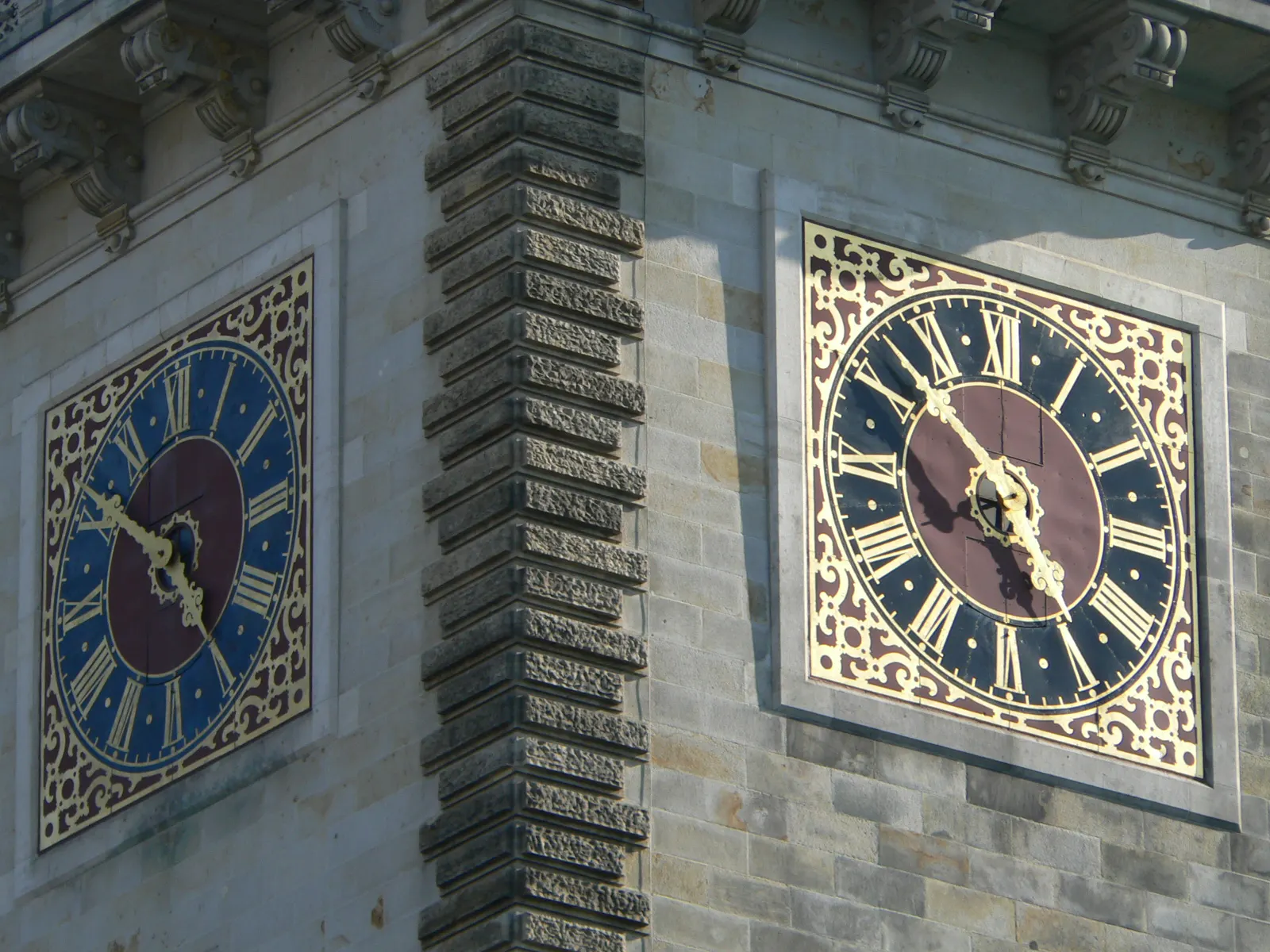
Photo: Hamburger Rathaus
- The main market, the Hamburger Weihnachtsmarkt am Rathaus, runs from late November to December 23.
- It is staged by Roncalli, the circus company, which is why it looks the way it does.
- Location: the Rathausmarkt in the Altstadt, the historic center of the city.
- A Father Christmas crosses overhead on a sleigh suspended above the square.
- The Rathausmarkt is the natural starting point for Hamburg's other markets, from Mönckebergstraße to St. Pauli.
The main event: the market on the Rathausmarkt
The Roncalli Christmas market on the Rathausmarkt brings a touch of circus showmanship to the usual mulled-wine routine. Lovingly decorated wooden stalls fill the square in front of the Hamburger Rathaus, there is a mirrored pavilion, and a Father Christmas sails overhead on a sleigh suspended above the crowd. It is Hamburg's most nostalgic address in December.
The setting does a lot of the work. The Hamburger Rathaus is a neo-Renaissance pile with 647 rooms, and the market sits directly at its feet, which means the backdrop to your first Glühwein is one of the grandest civic buildings in northern Europe.
Full details, dates and the location on the map are on the Hamburger Weihnachtsmarkt am Rathaus event page.
What a German Christmas market actually is
If this is your first one, the format is worth explaining, because it is not an American holiday fair. A Christmas market is a temporary village of small wooden stalls set up on a public square, open daily for roughly four weeks, and it functions as an outdoor living room rather than a shopping event. People come after work, stand around a barrel table in the cold and stay for an hour or two.
The drink is Glühwein, hot red wine spiced with cinnamon, cloves and citrus, sold by the mug at nearly every stall. It usually comes in a real ceramic mug rather than a paper cup, and German markets typically charge a small refundable deposit on that mug, which you get back when you return it, or you keep the mug as a souvenir. There is normally a version with a shot of rum in it, and a non-alcoholic Kinderpunsch for anyone who would rather not.
Dress for standing still outdoors in a damp northern port city in December rather than for walking. That is the single most useful piece of advice on this page.
The other markets in the city
The Rathausmarkt is a starting point, not the whole season. Hamburg runs a number of other Christmas markets, and two of them come up again and again.
- Mönckebergstraße The market along Mönckebergstraße, Hamburg's traditional shopping street. The street runs precisely between the Hauptbahnhof (Hamburg Central Station) and the Rathaus, so this one connects the two on foot without a detour.
- St. Pauli The market over in St. Pauli, on the Reeperbahn side of the city, a short S-Bahn or U-Bahn ride west of the center.
We are deliberately not listing daily opening hours or stall counts for the individual markets here, because they change from season to season. Check the current schedule for the year you are traveling.
Planning a December visit
The date that catches most American visitors out: the main market ends on December 23. A trip planned for the week between Christmas and New Year will miss it entirely. If the markets are the reason you are coming, aim for the first three weeks of December, and go on a weekday evening if you would rather not do your Glühwein in a crowd.
Getting there is easy. The Rathausmarkt sits in the Altstadt, Hamburg's historic center, and the U3 stops at Rathaus with a direct exit onto the square. Public transportation runs on one fare across the whole city, and a day ticket for the Hamburg AB area costs 8.20 euros, which our guide to getting around Hamburg explains in full.
Build the rest of the day around the square. Jungfernstieg and the Binnenalster are a few minutes away on foot, the shopping street runs east to the main station, and the Speicherstadt is about half an hour on foot to the south, across the Trostbrücke and the Holzbrücke by way of the Kontorhausviertel. It is at its best in the dark, when the brick gables are lit.
Also on in December
Hamburg's other winter fixture is the Hamburger DOM, the traveling funfair on the Heiligengeistfeld next to the Millerntor, which runs its winter edition in November and December. More than 250 showmen, rollercoasters, gingerbread hearts and a Ferris wheel. It is the loud, bright counterweight to the wooden stalls on the Rathausmarkt, a few stops west on the U3 at St. Pauli or Feldstraße.
For everything else happening across the year, see the Hamburg events overview.
Frequently asked questions
When is the Hamburg Christmas market?
The Hamburger Weihnachtsmarkt am Rathaus runs from late November to December 23. It closes before Christmas Eve, so a trip planned for the week between Christmas and New Year will miss it.
Where is the main Christmas market in Hamburg?
On the Rathausmarkt, the square in front of the Hamburger Rathaus, in the Altstadt district in the historic center of the city. The U3 stops at Rathaus with a direct exit onto the square.
What makes the Hamburg Christmas market different?
It is staged by Roncalli, the circus company, which gives it a theatrical look: decorated wooden stalls, a mirrored pavilion and a Father Christmas who crosses overhead on a sleigh suspended above the square.
Are there other Christmas markets in Hamburg?
Yes. The Rathausmarkt is the starting point for a wander through the city's other markets, including the one along Mönckebergstraße and the one in St. Pauli.
What is Glühwein?
Hot red wine spiced with cinnamon, cloves and citrus, sold by the mug at nearly every stall. It is normally served in a real ceramic mug with a small refundable deposit, and most stalls also sell a version with rum and a non-alcoholic Kinderpunsch.
Tours & tickets
Tickets, tours and experiences
Curated activities from GetYourGuide - book directly, with free cancellation on most options.
Offers from GetYourGuide. If you book through these widgets, we earn a small commission - the price stays the same for you.