Sight · Neustadt
Jungfernstieg
Hamburg's grand promenade on the Binnenalster - boulevard and meeting point since 1665.
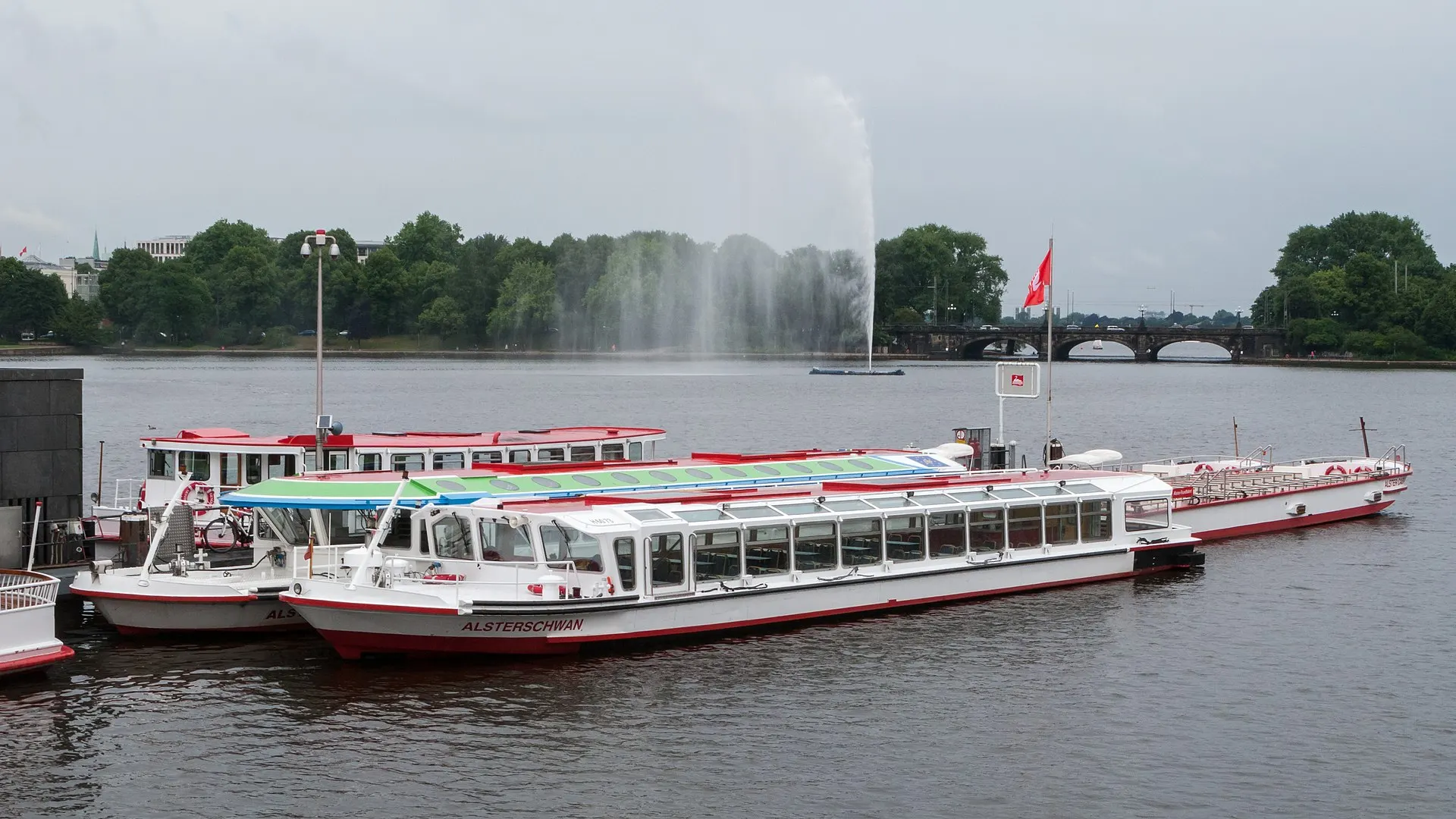
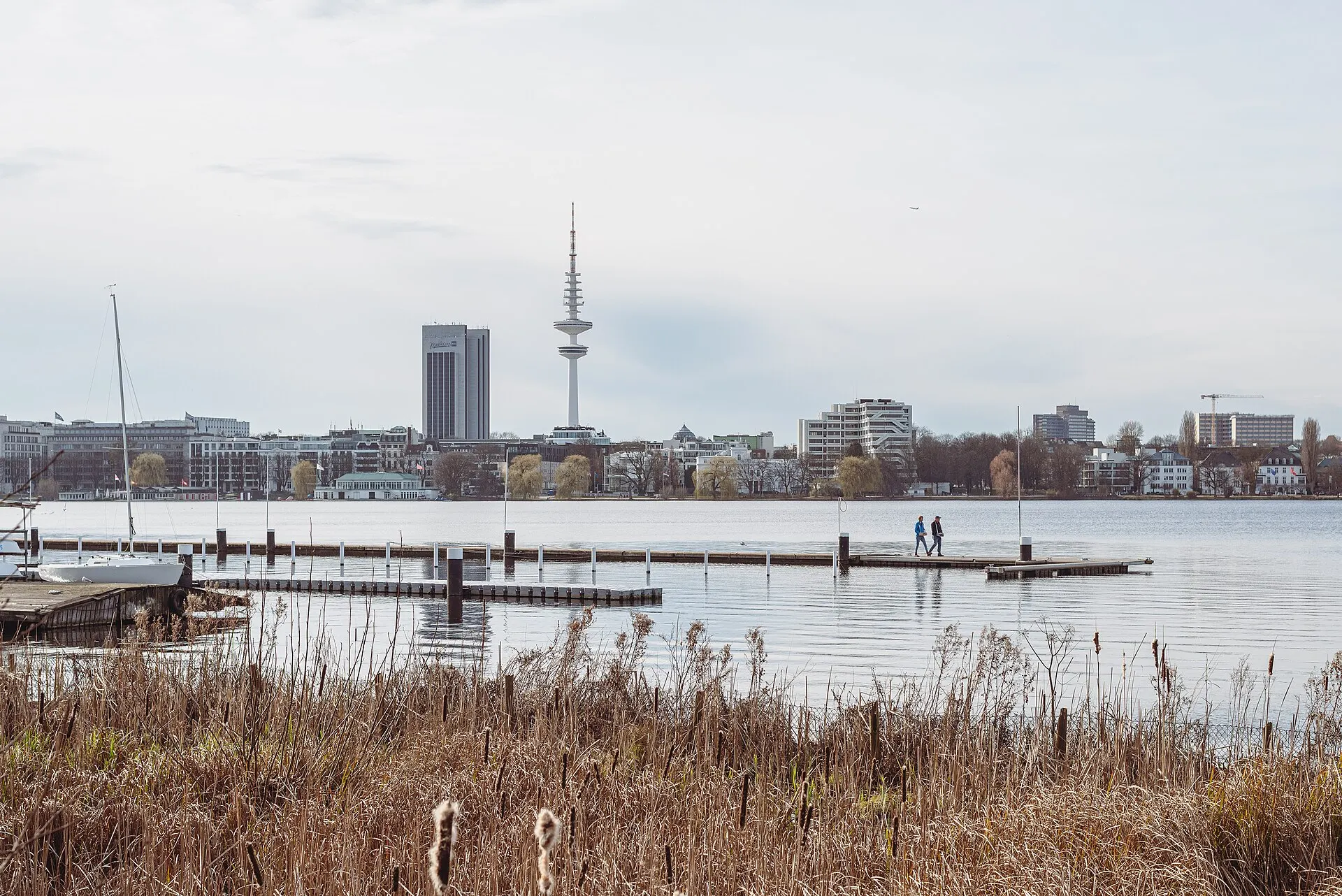
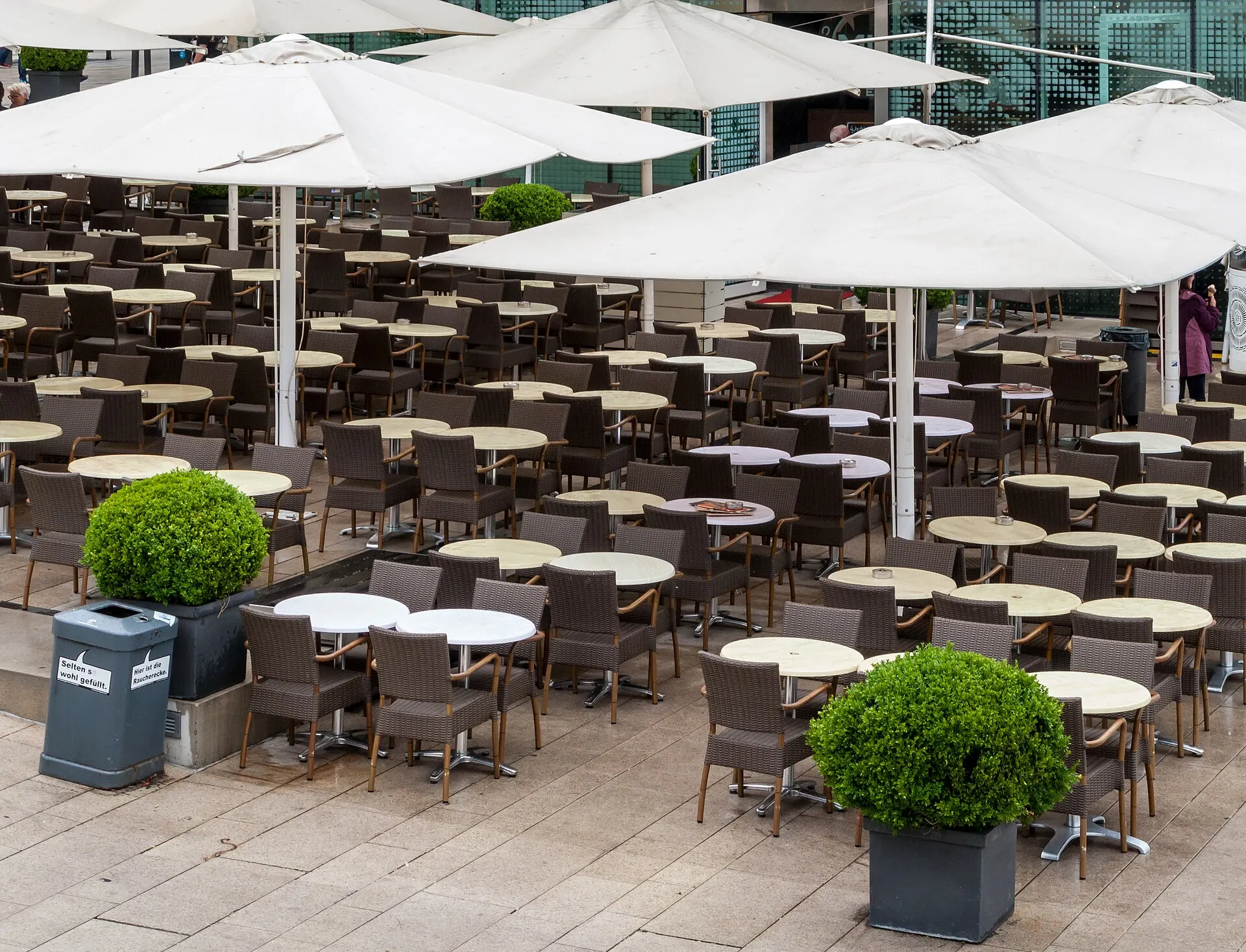
The Jungfernstieg has been Hamburg's boulevard since 1665 and, since 1838, Germany's first asphalted street. Four cross-streets, one promenade along the Binnenalster, and quite possibly the most exclusive shopping address in the Hanseatic city. The name goes back to a tradition of presenting unmarried daughters ('Jungfern') along the Alster on Sundays - that no longer applies, but the strolling continues. Highlights for walkers: the Alsterhaus (Hamburg's answer to Berlin's KaDeWe, opened in 1912), Karstadt Sport in the storied Carl-Lampe-Haus, the multi-story Apple Store, the Hotel Vier Jahreszeiten with its Haerlin restaurant, and the Alsterpavillon café-restaurant right on the water. Architecturally, the 1950s reconstruction dominates, with the handsome Streit-Haus (now Galeria) as the classic landmark. A practical tip: the Alsterdampfschifffahrt runs a 50-minute round trip across the Binnenalster and Außenalster from the Jungfernstieg jetty (10 €, May to September, a Hamburg classic). Right next door begin the Alsterarkaden with their café terraces - Hamburg's favorite spot for a spring lunch break, overlooking the Rathaus and the water. Getting there: U/S Jungfernstieg, the most central station in Hamburg with direct connections to the U1, U2, U4, S1, S2 and S3 - the second most important Underground stop in the city after the Hauptbahnhof.